Archive for March 23rd, 2010

The Adrian and Diego Mathier Winery

March 23rd, 2010 by Sébastien Gavillet

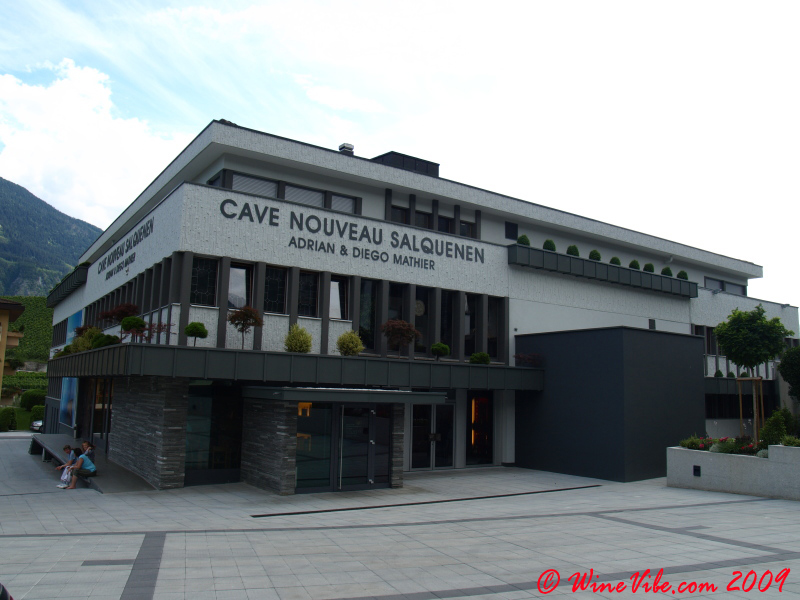
As you know from my post, Swiss Wine Facts, I have been to Switzerland recently. There I met with half a dozen winemakers and visited their wineries. The Adrian and Diego Mathier Estate was one of the wineries in my itinerary.

The Mathier Family and their Estate

The Adrian & Diego Mathier Estate is located in Salquenen, in the Swiss Canton of Valais. The Mathier family has been living in this wine producing village since 1387. The Mathiers have been making wine for four generations. Their domain extends to a total of 25 hectares (62 acres) of vineyards in Salquenen and Chamoson.

Wine is more than just a business to the Mathiers. It is their way of life. As with other Swiss wine producers, quality is the Mathier winery’s topmost priority.

Distinctive Salquenen Soil

Salquenen soil is unique in Valais. Salquenen soil is rich in lime and magnesium. On the other hand, the soil in most other wine producing areas of Valais consists of slate and gravel.

Winemaking Particularities

The grapes are not crushed. A centrifuge is used to separate the grapes from their stems. After fermentation, the grapes are pressed using a pneumatic press (applying pressure not exceeding 1.5 bars).

The Mathier Estate practices what I call “individual plot fermentation,” which is when grapes from a certain area (plot) of a vineyard are selected to be fermented by themselves rather than in a mixture with all the grapes of the same varietal harvested from the entire vineyard. This lets the Mathiers “experiment” and/or separate better quality grapes from lesser ones.

The Mathier family does not chaptalize their wine. Mathier vineyards get close to 330 days of sun per year! Additives may be added or used in the course of winemaking. Such additives include yeast, sulphur dioxide, carbon dioxide, calcium dioxide, and fining agents.

Wine may or may not be aged in oak. When it is, a type of French oak is used. Specifically, the Mathier family uses Quercus petraea (Sessile Oak) and Quercus robur (Pedunculate Oak).

Wine Production

The Mathier family produces more than 45 different types of wine and distillates. One of their most notable products is Glacier Wine (vin du glacier), a late harvest (noble rot) wine stored in ice chambers dug right into the Aletsch Glacier. These ice chambers make a perfect storage for late harvest wine. The ice acts as an electromagnetic shield, protecting the wine. This plus the low ambient temperature (just above freezing level) and the highly humid air all work together to preserve the wine.

The Mathier family’s wine production facilities are modern and very well maintained. (No surprise there; this is Switzerland, after all.) There are small, stainless steel tanks which the Mathiers use for individual plot fermentation (see the “winemaking particularities” section). Over the last few years, the winery’s facilities have undergone massive construction/renovation. This modernized operations and increased productivity without sacrificing quality.

The Adrian & Diego Mathier tasting room is open to the public. So the next time you are in Switzerland and find yourself in Valais (perhaps you’re on your way to visit the alpine resort of Crans-Montana or Zermatt – home to Switzerland’s, if not the world’s, most famous mountain, Matterhorn – or maybe you’re just traveling by train to Italy), be sure to make a quick stop in Salquenen and sample some of Adrian & Diego Mathier’s award-winning wines (that’s 150 gold medals over the years). I highly recommend it!

Cheers!

Swiss Wine Facts

March 17th, 2010 by Sébastien Gavillet

Not much is known about Swiss wine outside of Switzerland. When people think of Switzerland, they usually think of skiing, chocolates, cheeses, watches, and private banking, among other things. Where does wine fit into all this, and why don’t we know much about it?

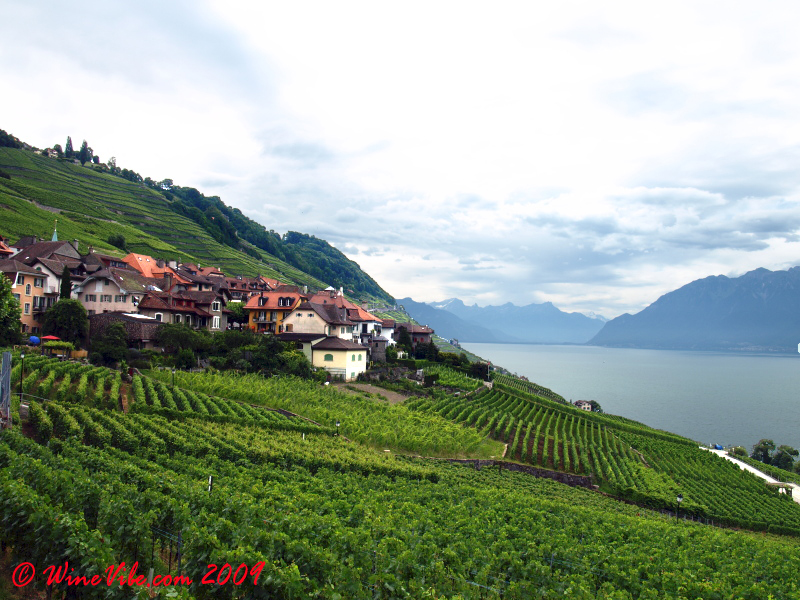
lavaux vineyards
Vineyards of Lavaux , Vaud, Switzerland

How much wine does Switzerland produce?

To put Switzerland’s wine production into perspective, I will compare it with California. Switzerland produces around 1.1 million hectoliters (29 million gallons) of wine a year. California, on the other hand, produced around 20.6 million hectoliters (545.8 million gallons) in 2008. In other words, Swiss wine production is only around 5% of California wine production. Clearly, Switzerland’s wine production is significantly less than California’s. Nevertheless, if you figure in Switzerland’s population, you’ll realize that Switzerland actually produces a lot of wine. Specifically, it produces more than 4 gallons or 21 bottles of wine per inhabitant.

How much wine does Switzerland export?

Over 4 gallons of wine per capita seems plenty, especially since people below 18 normally do not drink wine. Switzerland probably exports most of it – or does it, really? Well, it does not. Swiss wine export is actually very limited. It’s just supply and demand. Swiss people drink 4 times more wine than Americans do. In fact, Switzerland has to import around 1.7 million hectoliters of wine (45 million gallons) just to satisfy its people’s demand for wine. In short, residents of Switzerland love their wines so much that they leave very little available for export. Switzerland exports only 1.5% of the wine it produces. In contrast, according to the US Department of Commerce, California exported over 21% (3.8 million hectoliters or 100 million gallons) of its wine production in 2006. So, why do we know so little about Swiss wine again? Simple. Virtually all of it is consumed domestically. Not a lot of people outside Switzerland get to try it, let alone know about it.

Interesting trivia: Even though the demand for Swiss wine is very high, Swiss wine prices remain reasonable. Most Swiss wines are priced at the $12-$30 range.

Swiss wine varietals

Switzerland is most well known for growing Chasselas, a white grape variety often used as a table grape in Europe. For some reason (climate/soil), Chasselas has found a perfect home in Switzerland. Swiss Chasselas wines are delicate and elegant with great minerality. At first, it was thought that all Swiss Chasselas wines are best drunk young (within the first 2 years). However, sommeliers have discovered that some Chasselas wines 15 years and older from great producers and vintages actually drink very well. These vintages are creating beautiful, mature Chenin Blanc/Viognier-type wines. Switzerland is home to many indigenous varietals and has cross-cloned numerous varietals as well. Some 190 varietals are grown in Switzerland today. The most commonly cultivated are (in order of importance and categorized by wine type):

Reds:

Pinot Noir (52%), Gamay (19%), Merlot (12%), Gamaret (4%), Garanoir (2%), Syrah (2%)

Humagne Rouge, Diolinoir, and some fifty plus, non-listed varietals account for 9%

Whites:

Chasselas (66%), Muller-Thurgau (8%), Chardonnay (5%), Sylvaner (4%), Pinot Gris (2.5%)

Amigne, Pinot Blanc (Malvoisie), Charmont, Humagne Blanche, Petite Arvine, Riesling, Gewürztraminer, Heida (Paien) and some seventy or so non-listed varietals account for 14.5%

Swiss vines go back as far as 3,000 BC. According to records, Swiss viticulture and wine production began at the time of the Roman Empire. We owe today’s incredible terraces of vineyards in the Lavaux area to the monks. Some of these vineyards are now UNESCO World Heritage sites (enlisted/inscribed in 2007, UNESCO ref 1243).

More Swiss wine facts and trivia to come

This is just the start. Expect more blog posts about my trip into the heart of Switzerland’s wine production areas.

Cheers!

What are Super Tuscan Wines?

March 09th, 2010 by Sébastien Gavillet

A great question with a very simple answer. Super Tuscan wines (or Super Tuscans) are wines from Tuscany (Italy), and they have the following characteristics:

  • At least 85% of Super Tuscan wines consist of grapes produced in Tuscany to receive IGT cassification
  • The Super Tuscans’ winemaking process does not adhere to the local appellation law

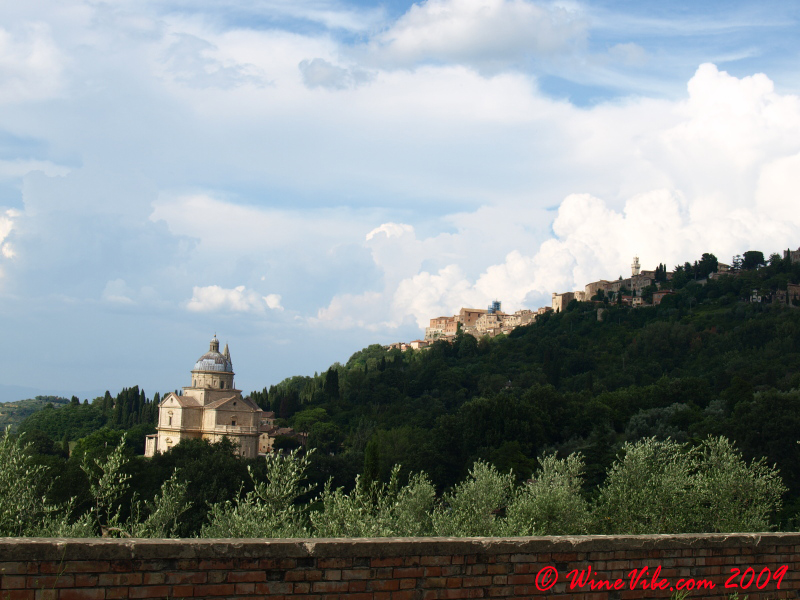
montepulciano-tuscany
View of Montepulciano, Tuscany

What does that mean exactly? Makers of Super Tuscan wines do not use Sangiovese as the dominant varietal. Instead, they use other wine grape varieties (mostly Bordeaux types) such as Cabernet Sauvignon and/or Merlot. This makes Super Tuscans ineligible for DOC (Denominazione di Origine Controllata) or DOCG (Denominazione di Origine Controllata e Garantita) classification under the local appellation law. Nevertheless, Super Tuscan wines do qualify for IGT (Indicazione Geografica Tipica) classification. Some of the most expensive wines from Tuscany are Super Tuscan wines such as Sassicaia, Tignanello, Solaia, Magari, Ornellaia and Picconero. Cheers!