Posts Tagged ‘Pinot Noir’

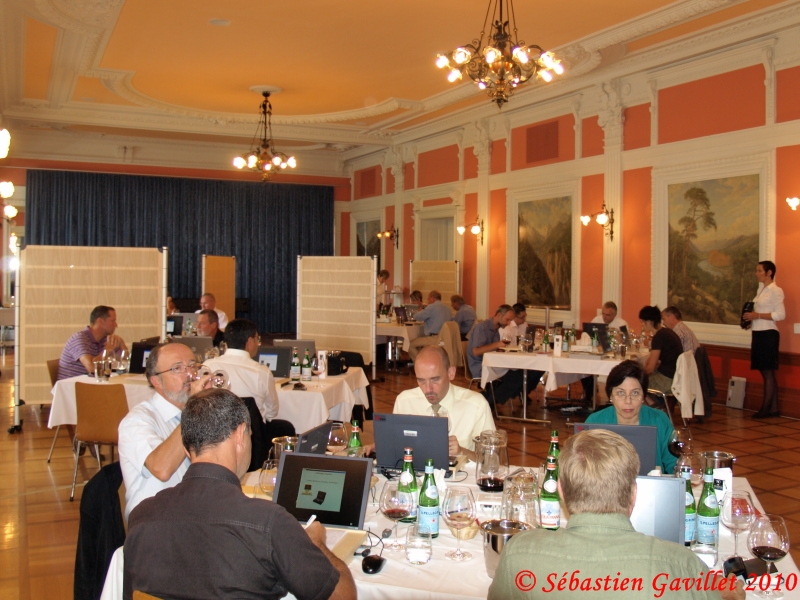
Le Mondial du Pinot Noir 2010

December 23rd, 2010 by Sébastien Gavillet

What would you call spending 3 days in the incredibly beautiful district of Sierre, sampling the best Pinot Noir wines the world has to offer? I’d call it heaven, but the VINEA Association calls it by a more earthly name: Le Mondial du Pinot Noir.

A Brief Background

Le Mondial du Pinot Noir is an international wine competition organized by the VINEA Association.

Side note: The VINEA Association is publisher of the Swiss Wine Guide and organizer of the world-renowned Swiss Wine Fair (held every September) and the Swiss wine competition, Grand Prix du Vin Suisse. Since 2006, it has managed the administrative side of the World Federation of Major International Competitions for Wines and Spirits (VinoFed). The VINEA Association organizes two prestigious international wine competitions, Le Mondial du Pinot Noir and Le Mondial du Merlot (which it co-organizes with ISICOM SA). Both of these competitions are members of VinoFed and enjoy the patronage of the International Organization of Vine and Wine (OIV) and the Union Internationale des OEnologues (UIOE).

Le Mondial du Pinot Noir is a competition focused on the Pinot Noir variety and other Pinot varieties (Pinot Gris and Pinot Blanc). Every year (starting from the very first Le Mondial du Pinot Noir in 1998), winemakers from various Pinot Noir-growing regions worldwide would gather in Sierre to present their best Pinot Noir appellations for sampling and judging by a panel of highly skilled international tasters.

The competing wines are tasted and judged using an evaluation sheet that combines the OIV form and the UIOE form for international competitions. The competition is organized strictly according to the rigorous standards set by the OIV. A computerized system is used to ensure that the competing wines are evaluated and rated in an orderly and systematic manner. The fairness and credibility of results are guaranteed; the composition of wine-tasting panels and awarding of prizes are in strict compliance to VinoFed’s rules and standards.

Side note: Wondering why Pinot Noir wines deserve special attention? Pinot Noir, with a total surface area of 85,000 hectares worldwide, is a very unique variety. Pinot Noir wines are exceptionally expressive of terroir and their producers’ vine-growing and winemaking techniques. Le Mondial du Pinot Noir, therefore, serves as a venue for wine producers to showcase their terroir and winemaking skills. Those who can produce the best expressions of Pinot Noir are rewarded with the worldwide recognition they deserve. Pinot Noir lovers, on the other hand, leave knowing which Pinot Noir wines they must absolutely try next.

This year, Le Mondial du Pinot Noir was held from the 20th to the 22nd of August at the Chateau du Mercier in Sierre, Valais Switzerland – and I’m glad to have been part of it.

The Wines

A little over 1,100 Pinot wines of different vintages, colors (red, white and rosé) and styles (dry, sweet, still, and sparkling) from 21 countries competed. The wines were grouped into three major categories: the Mondial du Pinot Noir Category, the Pinot Family Category and the Pinot Noir Producers World Champion Category. Le Mondial du Pinot Noir is mainly a Pinot Noir wine competition, but Pinot Gris and Pinot Blanc wines have a special place in the Discovery subcategory (under the Pinot Family major category).

At stake were gold medals, silver medals and the various special prizes: the Univerre Trophy prize, the Bourgogne d’Aujourd’hui prize, the Older vintage prize, the VINOFED prize, the Producers of Pinot Noir World Champion Syngenta prize and the Vitisphere for Digital Communication prize.

The jury was composed of 60 experienced wine tasters from Argentina, France, Germany, Italy, Malaysia, Netherlands, New Zealand, Romania, Sweden, Switzerland, and the United States

The Royal Treatment

I was one of the members of the jury, and this was my first time attending a VINEA function as a judge.  Although I’ve heard numerous accounts of how Le Mondial du Pinot Noir is always so superbly organized, the event still exceeded my expectations.

Top marks go to the competition’s organizers. Their excellent planning, outstanding preparation and faultless execution ensured the smooth flow of activities and made the event what it was: a huge success. Their impeccable hospitality, moreover, made for a truly memorable 3 days.

The organizers gave me and the rest of the jury a taste of the region’s history and culture by taking us on a tour of the nearby museums. We visited Fondation Pierre Gianadda and enjoyed the Nicolas de Staël Exhibition (this temporary exhibition will end on November 21st ). We also made a special trip to Chateau d’Aigle, a 12th century fortress towering over rows and rows of vines and home to The Vine and Wine Museum.

The organizers also treated our palates to the best food and wine the region has to offer. The most memorable are the Chamoson Raclette dinner set amidst the world’s oldest Petite Arvine vineyards (owned by Rene Favre & Fils) and the luncheon at Hotel Le Terminus’ gourmet restaurant, Didier de Courten (rated 2 stars by the MICHELIN Guide and 19 points by Gault Millau).

Le Mondial du Pinot Noir was truly a treat. I enjoyed every minute I spent walking around the beautiful Sierre countryside with its lovely weather, stunning mountain vistas and endless vineyards. I loved sampling the Pinot Noirs and other Pinot varietals, and I deeply admire the wine producers’ dedication to bringing out the best in these varieties. Most of all, I appreciate the warm hospitality the people of Sierre and the VINEA Association have shown me and my fellow members of the jury.

Pinot producers, do you think you make one of the world’s best Pinots? There’s only one way to find out. Enter your wine(s) in Le Mondial du Pinot Noir! For more information about Le Mondial du Pinot Noir, please visit www.mondial-du-pinot-noir.com.

Cheers!

Rene Favre & Fils – The Princes of Petite Arvine

May 06th, 2010 by Sébastien Gavillet

My journey into the Swiss wine country included a stop in St. Pierre-de-Clages, a village in the municipality of Chamoson in the canton (state) of Valais. There, I met up with Mike and John (Jean-Charles) Favre of the Rene Favre et Fils (Rene Favre & Sons) winery.

The Wine Region of St. Pierre-de-Clages, Chamoson

The wine-growing area of St.Pierre-de-Clages and Chamoson is the largest in Valais and home to around 30 different wine grape varieties. The soil in this area is mostly limestone. The vineyards are situated on the right bank of the Rhone River, and most of them are on gentle slopes. The unique location of the St.Pierre-de-Clages – Chamoson vineyards gives them a southern exposure that makes the proper maturation of wine grapes possible, and it is at the heart of this exceptionally located wine-growing region that you’ll find the Rene Favre & Fils Estate.

Rene Favre & Fils Winery

The Rene Favre & Fils winery specializes in Petite Arvine wines produced from the world’s oldest Petite Arvine vines. This family winery is currently run and operated by the Favre brothers, Mike and John.

John Favre first studied at the agricultural school of Chateauneuf in Valais. Next, he went to L’ecole Superieure de Changins, the best viticultural and oenology school in Switzerland.

Mike Favre took a slightly different route. He studied Economics before going on to study Oenology and Viticulture in the state’s engineering school. Then, he set off to the US where he lived and made wines for 7 years before returning to Switzerland and the family estate. Today Mike is Vice President of Vinofed, among other things.

Mike and John Favre represent the new generation of winemakers. Bold, forward-looking and passionate about their wines and vines, they are revolutionizing the industry by introducing and applying new techniques to viticulture and winemaking.

The Favre Vines

The Favre vineyards are easily identifiable by the way the vines are planted. Specifically, the vines are arranged into two tight rows and one larger row (see picture gallery).

The vines were planted this way mainly for efficiency. This configuration gives grape pickers better access to the grapes. It also makes the vines more accessible to a specialized machine that removes extra leaves. The removal of extra leaves increases air flow within the canopy. This helps prevent rot and other vine diseases and, consequently, the Favres don’t need to use pesticides on their vines.

The Favre vines are, in fact, some of the cleanest I have ever seen (see it for yourself by checking the picture gallery), and I have seen plenty in my trips to vineyards worldwide.

The Favre Wines and Wine Production

The Rene Favre & Fils winery produces a diverse range of wines. Their white wine production consists mainly of Petite Arvine, Johannisberg (Sylvaner) and Fendant (Chasselas). Their red wine production, in turn, consists mainly of Pinot Noir, Gamay, Humagne Rouge, Merlot, Syrah, and Diolinoir.

All Favre wines are made in the estate, and all of them are fermented in stainless steel vats. Most of the whites never see oak, but all the reds do. The profiles of Favre wines are typical of the region, with the exception of a few blends which Mike and John have produced for a more international palate.

My personal favorite in the Favre white wine lineup is the “old vines” Petite Arvine (i.e. Petite Arvine wine made with grapes harvested from very old Petite Arvine vines). This wine is fresh with a medium body and balanced acidity. It has the aromas of lemon, grapefruit rind and rhubarb and some floral notes, too. It also has noticeable minerality (limestone) on the palate and a pleasant touch of salinity.

My favorite Favre red is the Renommée St. Pierre, which is surprisingly rich and fruit driven for a Suisse Pinot Noir. This is wine aged for 18 months in oak, and I highly recommend it to any Pinot lovers.

This is all for now. Watch out for more posts about Swiss winemakers and Swiss wines. In the meantime, you can read the first two installments in the Swiss wine series: Swiss Wine Facts and The Adrian and Diego Mathier Winery.

Cheers!

Holdredge Wine Tasting

January 21st, 2009 by Sébastien Gavillet

J & P Wholesale, the boutique wine division of Southern Wines & Spirits, hosted the Holdredge Wines’ 2007 release wine tasting.  The tasting took place at the Rio Hotel and Casino in Las Vegas.  John Holdredge, owner/wine maker of Holdredge Wines, presented the wines himself.

Nine wines were presented during the Holdredge wine tasting.  These wines were made using the following varietals or grapes:  Pinot Noir, Syrah, Zinfandel, late-harvest Pinot Gris, and late-harvest Gewürztraminer.

Pinot Noir is John’s specialty, and his wine making technique focuses on showing off the features of the terroir in which the grapes are grown.  He uses an all-natural wine making process, one that is directed by his nose, palate and heart.  John produces truly fine Pinot Noir, and two of his new wine releases are included in my top 5 California Pinot Noir wines for 2007.

Wine Reviews and Wine Tasting Notes:  My Top 2 Holdredge Wines

Now, let’s talk about the Holdredge Wines, particularly the wines presented at the tasting.  The following are the two wines that I liked best among the newly released Holdredge wines:

2007 Bucher Vineyard Pinot Noir (Russian River)

This wine has the aromas of raspberry, rose petals, strawberry, hazelnuts, and some spices.  It has medium plus body.  It is heavier/bigger than the Wren Hop (see below), but it still has great structure, body and complexity.  This is one great wine.

2007 Wren Hop Vineyard Pinot Noir (Russian River)

This is the wine I liked best among the nine wines presented at the Holdredge wine tasting.  The 2007 Wren Hop Pinot Noir is such a delicate yet complex wine – almost Burgundian.  It has the aromas of cherry “griotte,” raspberry, strawberry, and maybe even pomegranate.  It is medium-bodied and elegant, and it has delicate structure with almost silky tannins and a lingering velvety finish.  This wine is truly very enjoyable even at such a young age; it should age well.

That’s all for this wine tasting.  I know my wine reviews and wine tasting notes are rather brief, but I hope they’ll still help you make wine buying decisions.  Cheers!

Oregon Pinots: Wines with Plenty of Personality

August 12th, 2008 by Agi Toth D.W.S.

Finally!  My chance to participate in the Oregon Pinot Camp has arrived.  “Camp?” my friends’ incredulous faces stared back at me.  “Your work is taking you to Oregon to drink wine for four days?”  Well… when you put it like that… I guess I have to say, “Yes!”

Every year, 50 of Oregon’s wineries or wine companies come together and invite over 250 hospitality and wine professionals to explore and experience the Oregon wine country.  In the last 30 years, Oregon’s Pinot Noirs have gone from being unknown entities to international “celebrities,” receiving recognition and acclaim from wine industry professionals worldwide.  Wine lovers who had previously stocked only Burgundies in their wine cellars have now started stocking Pinots produced from the wine grapes grown in Willamette Valley, Dundee Hills and Yamhill County.

The Oregon Pinot Camp

I and the other wine professionals participated in six workshops.  We learned about the history of Oregon wine making and explored Oregon wines’ vintages and wine styles.  We also discussed and tasted Oregon’s white wines.  Winemakers took us to their vineyards to discuss terroir.  You know what?  There’s nothing like squeezing dirt clods (oops, excuse my indelicate faux pas… should I say soil samples instead?) if you want to understand the difference between sedimentary and volcanic-based earth.

The star of the show?  The Pinot Noir, bien sûr (of course) – that persistently persnickety grape that perpetually puzzles and perplexes even the most devoted winemaker.  In order to make the wonderfully elegant and silky wine that we call Pinot, vine growers dedicate their lives to combating this thin-skinned grape’s proneness to rot.  They have to stay up at all hours of the night, zipping through their plots, tasting, chewing, spitting, and tasting again and again – until the grapes finally “whisper” to their caretakers that full ripeness has been achieved and the right moment to begin harvest has arrived.

The Pinot wine tasting focused on the 2006 vintage, a year that pleased many winemakers and yielded high-quality grapes.  It is clear that Oregon winemakers strive to produce wines that are true to Pinot’s varietal characteristics.  Although the wines at the wine tasting were very young, they displayed a variety of aromas and flavors that ranged from bright, fresh, red berries to riper, dark blackberries and plum.  The various uses of oak were apparent, and the flavors ranged from the more subtle (e.g. elegant Pinots from the Domain Drouhin winemaker) to fuller-bodied, spicier versions that expressed more cedar, vanilla and tobacco (e.g. Pinots from the Panther Creek and Witness Tree vineyards).

As a group, Oregon Pinots exhibit a mouthwatering acidity, firm tannins, fruit complexity, and a lengthy finish – all of which are important elements of quality and agreeability.

The Pinot Gris was also featured, and this grape reigned supreme among the whites.  The Pinot Gris wines we sampled were deliciously crisp, clean and refreshing.  They can accompany many a dish.  Gee, I suddenly have this craving for seared scallops and asparagus – but, I digress.

The winemakers from Oregon are also being creative and are experimenting with other varietals such as Chardonnay.  A wonderfully refreshing example is Soter/Argyles’s sparkling blanc de blancs.  The Ponzi Winery makes a lovely Arneis; others are dabbling with more aromatic varietals such as Riesling and Gewürztraminer.

As we floated over the vineyards of Oregon in our hot air balloon (mais oui!) one morning, I thought about the Oregon winemakers.  Although they have initially looked to Burgundy for inspiration, they remained true to their goal of discovering their own style and unique expression of terroir.  They are succeeding quite well in this department, too.  In fact, they have started attracting the French.  French owned Willakenzie Winery had fun in mind when it produced Plaisir à Trois, a unique blend of Pinot Noir, Pinot Meunier and Gamay Noir.

The Oregon wine country deserves our praise, indeed.  It’s a place worth watching, especially for those people who have a predisposition for particular Pinots.

Cheers!

Vox Wine Lounge Blind Wine Tasting

February 29th, 2008 by Sébastien Gavillet

Two blind wine tastings in one day is almost too good to be true.  Apart from the Dierberg & Star Lane blind tasting which I discussed in the previous post, I also participated in the Vox Wine Lounge blind wine tasting.

Twice a month (every other Tuesday night), William Sherer, Master Sommelier and wine director of Aureole in Las Vegas, organizes a blind wine tasting for wine industry professionals.  Most of the participants to these blind tastings are master sommeliers, wine buyers and wine aficionados.  These events follow a set format.  At every tasting, one type of grape varietal or wine style is featured, and each of the participants must bring a bottle of the selected grape varietal or wine style.  The blind tastings are held on a different venue every time.

This week, the blind tasting was held at the Vox Wine Lounge in Henderson, NV.  Patrick Pretz, Vox’s sommelier, played host.  We owe him a great thank you for his wonderful hospitality.

The Blind Tasting Format

The Vox Wine Lounge blind tasting was different from all the other blind tastings I’ve been to.  I have participated in numerous blind tastings before and, in such events, the participants usually sampled and examined the featured wines then shared and compared tasting notes afterwards.  The Vox Wine Lounge tasting followed a different procedure, however.

Each of the participants was given a specific role at the wine tasting.  Every one had to examine, describe and analyze only one aspect of the featured wines be it color, nose (aromas & bouquet), taste (aromas), structure, origin, vintage, or producer.  For instance, one taster would sample a wine and assess it according to his aspect assignment (e.g. color); another taster would then sample the same wine and assess it according to the aspect assigned him (e.g. assess where the wine came from); and yet another taster would sample the same wine and evaluate it on yet another aspect (e.g. structure).  The whole thing sounds complicated, I know, but you’ll be surprised at how much fun this type of blind tasting can be.

Wine Tasting Results

The Vox Wine Lounge blind wine tasting was very successful.  It was very entertaining and, more importantly, very educational.  One truly learns a lot by working in a group and sharing knowledge and expertise with others.  In fact, working in a group also means greater accuracy as everyone benefits from the expertise of the other participants.

As a case in point, at the Vox Wine Lounge blind tasting, the group was able to guess the correct vintage of 60 percent of the 14 wines sampled.  More amazingly, the group accurately pinpointed the geographical origin of 95 percent of the wines.  Of the 95 percent, 50 percent was traced back to the correct region or area, 20 percent to the precise AOC or AVA and 15 percent to the actual wine producer.  The only two wines we failed to place were a Pinot Noir Cava (sparkling wine) from Argentina and a Pinot Noir from the Loire Valley in France.

My Vox Wine Lounge wine tasting experience definitely proves that one always learns more about a wine’s characteristics when discussing it openly with other wine professionals.

Get Set for the Next Blind Wine Tasting

The next blind wine tasting will be held on March 11th, 2008, Tuesday, at the Marché Bacchus in Summerlin.  The grape varietal for that tasting will be Chardonnay, and the wines can come from anywhere in the world.  Be creative and bring something everyone can enjoy.

That’s all for this wine tasting.  Cheers!